Quick Answer
Before the cold settles over Waterloo Region, check your tread depth, tire pressure, age, and overall condition, then confirm whether your current tires can handle ice and snow. A short seasonal inspection catches small problems early, keeps your family safe on the road, and gives you real peace of mind.
A solid winter tire checklist for Waterloo doesn’t need to be complicated. As the evenings start to cool and the first frost creeps closer, a few honest minutes in the driveway can save you a slippery morning later. At Jerry Zister’s, we’ve been your neighbourhood mechanics since 1967, and we’ve watched three generations of local families roll through the same seasonal routine. This guide walks you through seven things worth looking at before the snow flies, so you head into the cold months feeling confident instead of caught off guard.
Start Your Winter Tire Checklist for Waterloo With Tread Depth
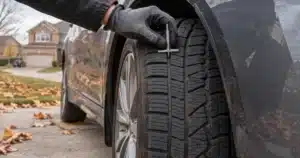
Tread is what grips the road, so it’s the first stop on any winter tire checklist for Waterloo. If you’re wondering how to check tire tread depth at home, the old quarter trick still works: slide a quarter into a groove with the caribou’s nose pointing down, and if you can see the tip of the nose, your tread is getting low.
Winter driving asks a lot more from those grooves than a dry summer commute. Shallow tread means longer stopping distances on snow and slush, which is exactly when you need every bit of grip. If the wear looks close, we’re happy to measure it properly and tell you exactly what your tires need.
Know When to Switch to Winter Tires
A common question we hear is when to switch to winter tires in Ontario. The simple rule of thumb: once temperatures regularly dip toward seven degrees and stay there, all-season rubber starts to harden and lose grip, while dedicated winter tires stay soft and bite into cold pavement.
Getting ahead of the first frost is smart. Shops fill up quickly once the snow arrives, so booking early means you’re ready before the roads turn. If you’re not sure your all-season tires can handle a Kitchener-Waterloo winter, we’ll give you an honest answer, no pressure and no surprises.
Check and Adjust Tire Pressure
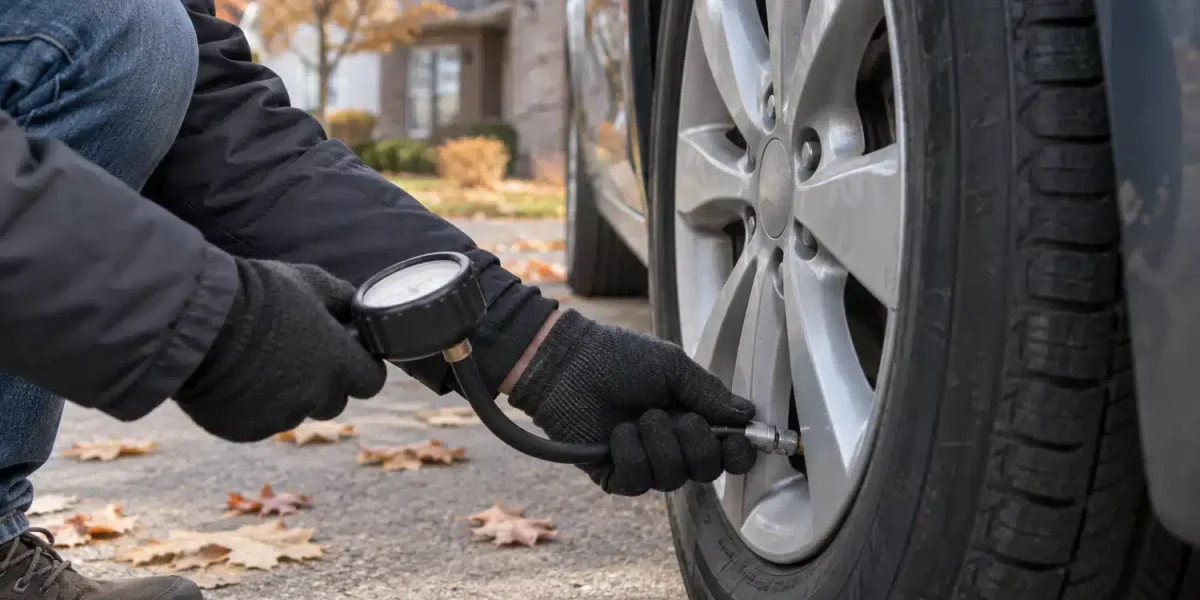
Cold air shrinks the air inside your tires, so pressure naturally drops as the season turns. Under-inflated tires wear unevenly, waste fuel, and handle poorly on slick roads. That makes a quick pressure check one of the easiest wins on this list.
Your correct pressure is printed on a sticker inside the driver’s door jamb, not on the tire itself. If your dashboard warning light comes on, don’t ignore it. Our team handles tire pressure monitoring and adjustment as part of routine service, so you can roll into winter properly inflated.
Look at the Age and Condition of the Rubber
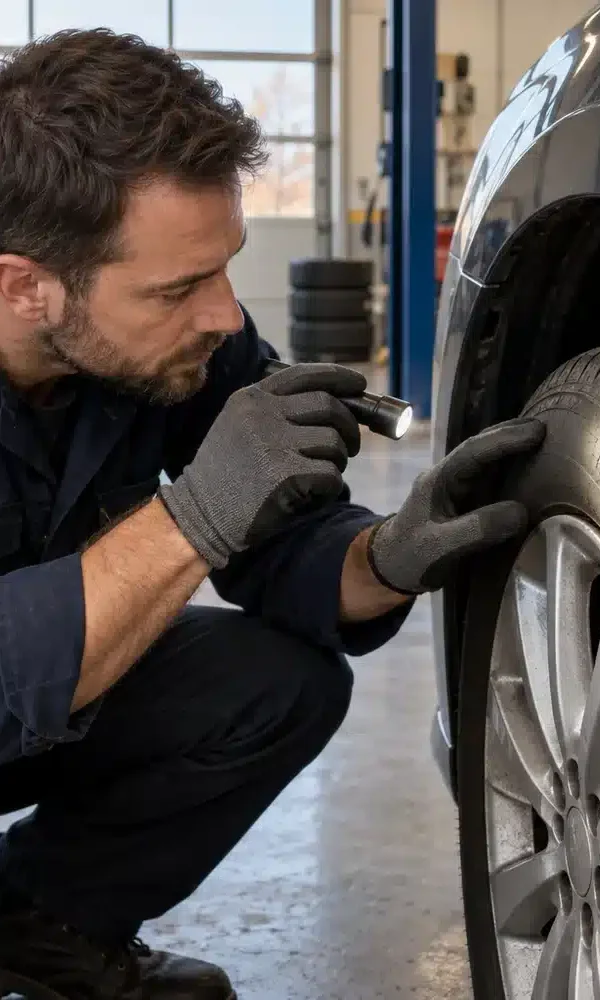
Tread isn’t the whole story. Rubber ages, and older tires can develop tiny cracks in the sidewall or between the treads, even with plenty of tread left. Ontario winters are hard on rubber, and brittle tires lose grip when you need it most.
Run your hand along the sidewalls and look for cracking, bulges, or embedded stones and nails. If something feels off, have it checked. We offer flat repair and full inspections through our wheels and tires service, and we’ll always tell you whether a tire is safe to keep or better to replace.
Watch for Uneven Wear
If one edge of a tire is balding faster than the other, that’s a clue your wheels may be out of alignment or your suspension needs attention. Uneven wear shortens tire life and can pull your steering to one side, which is unnerving on icy roads.
Alignment issues rarely fix themselves, and they quietly cost you money in premium rubber. A quick look at direction and wheel alignment before winter keeps your tread wearing evenly. While we’re under there, we can also flag anything on your brakes that deserves a second look before the snow.
Don’t Forget the Spare
Your spare only matters on the day you actually need it, and a flat on a cold shoulder is no time to discover it’s soft or missing. Give it a quick pressure check and confirm your jack and tools are all where they belong.
Many newer vehicles carry a compact spare or a repair kit instead of a full-size tire, so know which one you’ve got. If you’re not sure, ask us during your next visit. A little preparation here pays off big when the weather turns nasty.
Plan Your Seasonal Changeover and Storage
Once your winter set is ready, the changeover itself is straightforward, and this is where planning ahead really helps. We handle tire mounting and balancing, seasonal changeover, and off-season storage, so your summer tires stay clean and safe in our shop instead of taking up space in your garage.
We carry a full inventory from trusted names like Michelin, Goodyear, Bridgestone, and Hankook, in sizes for every make and model. Prices vary by vehicle and by the tires you choose, so reach out for a straightforward quote. As always, no hidden charges, just honest advice from your neighbourhood shop.
FAQ
How do I check my tire tread depth without a gauge?
The quarter test is the easiest home method. Insert a quarter into the tread groove with the caribou pointing down. If the top of the nose is covered, you still have reasonable tread. If you can see the whole nose, your tread is worn and it’s time to have the tires measured properly. We’re glad to check them precisely and give you an honest read on how much life is left.
When is the right time to switch to winter tires in Ontario?
A good guideline is to switch once daytime temperatures consistently sit near seven degrees or below. That’s usually well before the first snowfall, so booking early helps you avoid the seasonal rush. Winter tires stay flexible in the cold and grip far better than all-seasons on ice and snow, which keeps your family safer on Waterloo Region roads.
Can I just run all-season tires through winter?
You can, but you’ll notice the difference in cold, wet, and snowy conditions, where all-seasons harden and lose traction. Dedicated winter tires give shorter stopping distances and better control. If you drive daily around Kitchener, Waterloo, or Cambridge, we usually recommend a proper winter set. We’ll walk you through the options and never push you toward anything you don’t need.
Do you store my summer tires between seasons?
Yes. Our seasonal tire storage keeps your off-season set clean, dry, and out of your garage until you need them again. When the weather warms up, you simply book your swap and we handle the mounting and balancing. It’s an easy way to protect your investment and keep the changeover stress-free at your neighbourhood shop.
Conclusion
Working through a winter tire checklist for Waterloo takes only a few minutes, but it pays off all season with better grip, safer stops, and genuine peace of mind. Tread, pressure, age, wear, the spare, and a well-timed changeover cover the essentials.
At Jerry Zister’s, we’ve been keeping local families safe on the road for nearly 60 years, and we’d be glad to do the same for yours.
Book your seasonal tire check with us today and head into winter ready.