Quick Answer
Why does my brake pedal feel soft? Usually it points to air or moisture in the brake fluid, worn pads, or a slow leak in a line or caliper. A soft pedal means the hydraulic system isn’t building full pressure, so it’s worth a professional look before the cold driving season sets in.
You press the pedal, and instead of a firm, confident stop, it sinks a little further than it should. That sinking feeling is your car trying to tell you something. At Jerry Zister’s, we hear about it every year as the evenings start to cool, when families get back into busy morning routines and longer commutes.
The good news is that a spongy pedal is almost always fixable, and catching it early keeps your family safe on the road. Below, we’ll walk through what causes it, how fall weather plays a part, and what to expect when you bring your vehicle in to your neighbourhood mechanics.
Why Does My Brake Pedal Feel Soft?
Your braking system is hydraulic, which means it works by pushing fluid through sealed lines to squeeze the pads against the rotors. When everything is healthy, that pressure builds instantly and the pedal feels firm. A soft or spongy pedal tells us the pressure is escaping somewhere it shouldn’t, or that something in the system has worn down.
Most of the time the culprit is air or moisture that has worked its way into the fluid. Air compresses, fluid does not, so even a small bubble turns a solid stop into a mushy one. In other cases, worn pads, a leaking caliper, or a tired brake line are behind that sinking sensation.
The important thing is this: a low pedal is a signal, not a verdict. It doesn’t mean your car is unsafe to drive across town, but it does mean you deserve an honest answer. That’s exactly what a certified inspection gives you.
Common Causes of a Spongy Brake Pedal
When customers ask us why their brakes feel spongy, a handful of issues come up again and again. Understanding the most common spongy brakes causes and fix options helps you make a confident decision instead of a worried guess.
Moisture in the fluid is the number one offender. Brake fluid naturally absorbs water over time, and that water lowers its boiling point and softens the pedal. Air trapped in the lines does the same thing, which is why a proper flush and bleed restores that firm feel so effectively.
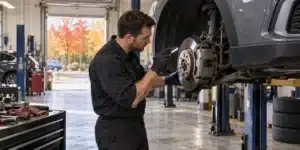
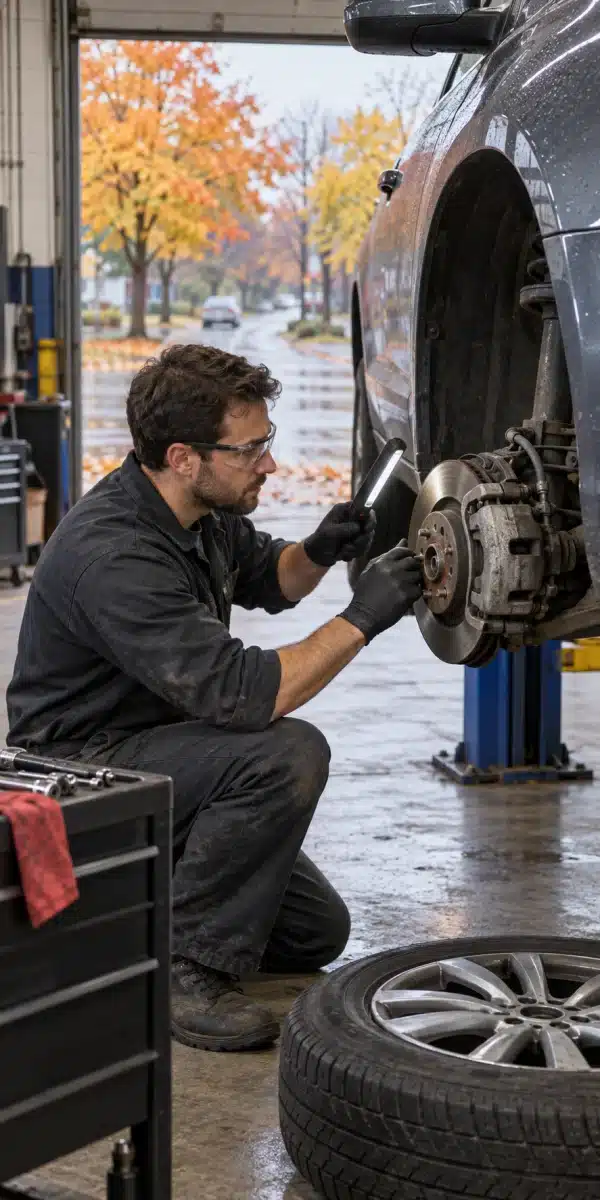
Worn brake pads and thinning rotors also change how the pedal responds, especially when you brake often in stop-and-go traffic. Beyond that, a leaking caliper, a corroded brake line, or a failing master cylinder can each let pressure slip away. Our certified technicians check all of these so nothing gets missed.
The fix depends on what we find, and it can range from a simple fluid service to replacing a worn component. Whatever the outcome, you’ll get a clear explanation and no surprises. If you’d like the full rundown, our brake repair and inspection service covers the whole system from pads to lines.
How Fall Weather Affects Your Braking
Cooler mornings do more to your vehicle than fog up the windshield. As temperatures drop, condensation forms more readily, and any moisture already sitting in your brake fluid becomes more noticeable in how the pedal behaves.
Fall is also when road grit, wet leaves, and the first slick surfaces show up around Kitchener-Waterloo. Your brakes work harder in these conditions, so a pedal that felt fine all summer can suddenly feel soft during a damp morning commute. That’s not a coincidence, it’s physics meeting seasonal change.
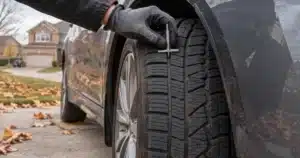
Because this is the season to prepare your vehicle for winter, it’s the natural moment to have the braking system looked at alongside your other cold-weather prep. Many families pair it with their winter tire changeover, which our team handles through our wheels and tires service. Getting both done before the first frost means one less thing to worry about when the snow arrives.
Why a Brake Fluid Check Before Winter Matters
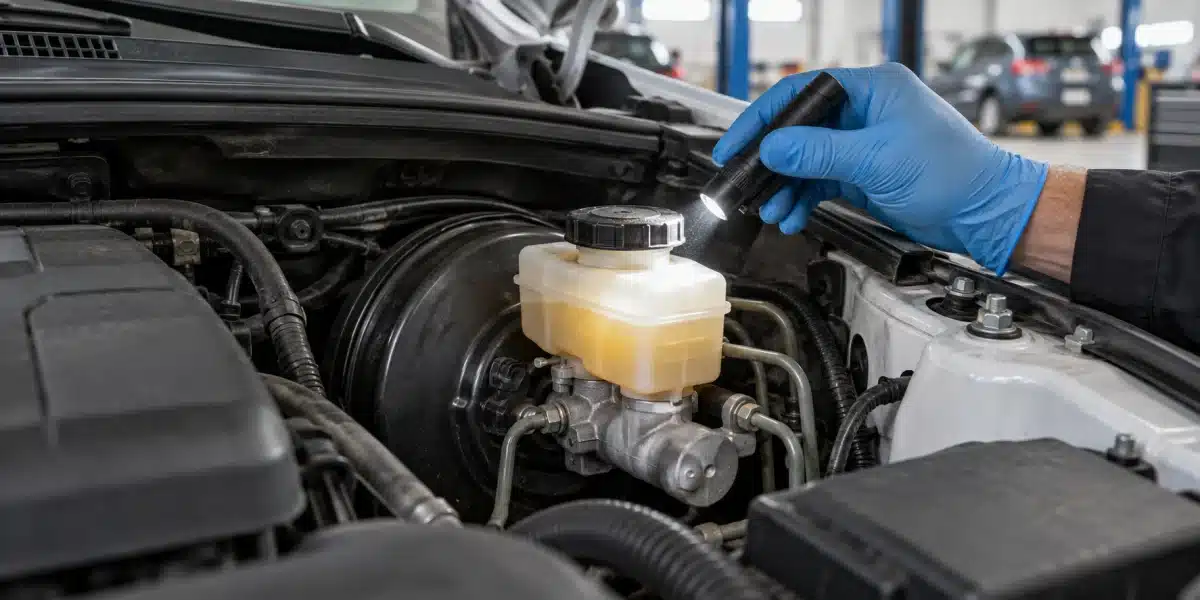
A brake fluid check before winter is one of the simplest, most valuable steps in getting ready for the cold months. Fresh fluid with a healthy boiling point keeps your pedal firm and your stopping distances predictable when the roads turn nasty.
Over the years, fluid picks up moisture through seals and hoses, even in a car that’s driven gently. That’s why a full brake inspection is recommended every 50,000 km, and why a quick fluid test can flag a problem long before you feel it in the pedal. Preventive care like this is what we mean when we say we treat your car like our own.
Think of it as peace of mind rather than an expense. Pricing varies by vehicle make, model, and condition, so the honest thing to do is give you a straightforward quote after we’ve had a look. There are no hidden charges, and we’ll tell you exactly what your car needs and nothing it doesn’t.
What to Expect at Our Shop
When you bring your vehicle to Jerry Zister’s, we start with a full inspection of the braking system: pads, rotors, calipers, lines, and the fluid itself. Our certified technicians use NAPA-backed quality parts, so any component we replace is built to last through Ontario winters.
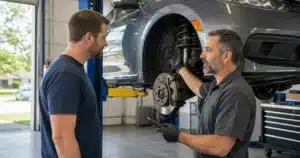
If the fix is a fluid flush, we handle it cleanly and get you back on the road with a firm pedal. If a pad, rotor, or line needs attention, we’ll show you the wear and explain your options in plain language. You decide, never us.
Brakes are also a great time to think about the bigger picture. A soft pedal sometimes travels with other suspension and handling clues, so it can be worth booking general car maintenance to keep everything in step. As your neighbourhood shop since 1967, we’d rather set you up for a safe season than sell you a quick patch.
FAQ
Is it safe to drive with a spongy brake pedal?
A slightly soft pedal often means you can still drive carefully to a shop, but it’s a clear sign to get it checked soon. If the pedal sinks close to the floor or the car pulls when stopping, treat it as urgent and avoid highway speeds. Our certified team can inspect the whole system and give you an honest, no-pressure answer about what’s safe.
How often should brake fluid be replaced?
As a general rule, a full brake inspection is recommended every 50,000 km, and fluid condition is checked at the same time. Because brake fluid absorbs moisture over the years, many vehicles benefit from a flush before that mileage. We test yours and only recommend a replacement when the numbers actually call for it, with no upselling.
Can cold weather really make my brakes feel different?
Yes. Cooler, damper conditions bring out moisture that may already be in the fluid, and that changes how the pedal responds. Add wet leaves and slick roads, and your brakes simply work harder. A quick seasonal check keeps stopping power consistent, which is why fall is such a smart time to prepare your vehicle for winter driving.
Will you tell me the cost before doing any work?
Always. We inspect first, then explain what we found and what it will take to fix it. Pricing depends on your vehicle’s make, model, and condition, so we confirm every estimate with you before we start. No hidden charges, no surprises, just straight talk from your neighbourhood mechanics.
Conclusion
A firm brake pedal is one of the clearest signs that your family is well protected on every trip, and it’s easy to restore once you know the cause.
So if you’ve been wondering why does my brake pedal feel soft, the answer is usually a quick fluid service or a worn part our certified team can handle before the cold sets in. At Jerry Zister’s, three generations of experience mean an honest inspection and real peace of mind.
Book your fall brake check with your neighbourhood mechanics today and head into winter with confidence.