Quick Answer
Wondering what to do if car overheats on the 401? Pull over safely onto the shoulder, shut off the A/C, then turn the heater on high to draw heat away from the engine. Let everything cool before you check the coolant, never open a hot radiator cap, and call a trusted mechanic.
There’s a special kind of stress that hits when the temperature gauge climbs while you’re cruising down the highway with the kids in the back. Steam, a warning light, that sinking feeling. At Jerry Zister’s, we’ve helped families across Kitchener-Waterloo through this exact moment for nearly 60 years. The good news? A little know-how and some steady nerves go a long way. Below, we’ll walk you through why engines run hot in the summer heat, the warning signs to catch early, and the calm, practical steps that protect both your family and your vehicle when things heat up on the road.
Why Engines Overheat on Summer Highways
Your engine makes a tremendous amount of heat, and the cooling system’s whole job is to carry that heat away. When something in that system falls behind, temperatures climb fast. On a hot Ontario afternoon, with the A/C running and traffic crawling near Cambridge, the margin for error gets thin.
Most overheating traces back to a handful of causes: low or old coolant, a leaking hose, a failing water pump, a stuck thermostat, or a radiator that’s clogged with debris. A weak cooling fan can do it too, especially in stop-and-go traffic.
Highways add their own twist. Long stretches at speed put a sustained load on the engine, and if your coolant is already tired or your hoses are cracked, a hot summer day is often the moment those weaknesses finally show up.
Signs of an Overheating Engine to Watch For
Catching trouble early can save you a tow and a much bigger repair bill. The signs of an overheating engine usually appear before things get serious, so it pays to know them.
Keep an eye on your temperature gauge creeping toward the red, or a dashboard warning light glowing. You might notice steam or a sweet, syrupy smell coming from under the hood, or a ticking noise as metal parts expand.
Reduced power, a rough idle, or coolant pooling under the car after you park are other red flags. If you feel any of these while driving, don’t push through and hope it settles. Treating the warning as real, right away, is how you keep a minor issue from becoming a cracked engine block.
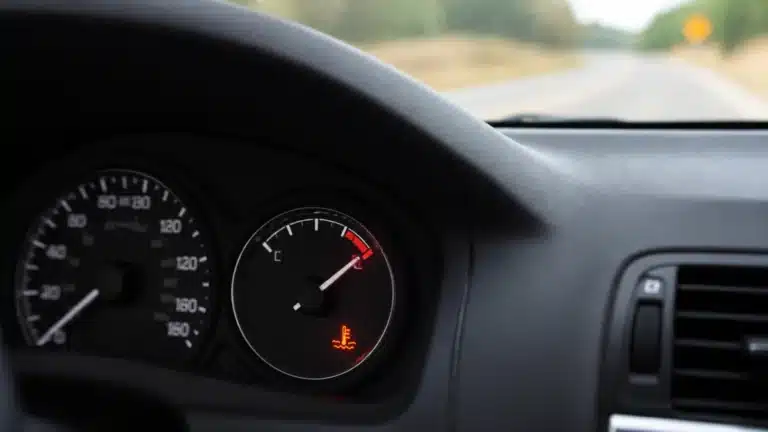
What to Do If Car Overheats While Driving
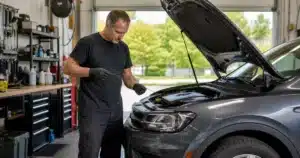
First, stay calm and think safety. Signal, ease off the accelerator, and guide your vehicle onto the shoulder or the nearest exit. Turn on your hazard lights so other drivers give you room.
Next, shut off the air conditioning and crank the heater to full blast. It feels counterintuitive on a summer day, but the heater pulls heat out of the engine and buys you precious minutes. If the gauge keeps rising, turn the engine off and let it rest.
Now the patience part. Wait at least 15 to 20 minutes before you touch anything. Opening a radiator or coolant cap while the system is hot can spray scalding fluid and cause serious burns. Once things have cooled, check the coolant reservoir and top it up if it’s low, using the right type for your car.
If the coolant is full but the engine still overheats, or if you spot a leak, don’t gamble on limping home. Call for a tow and reach out to your neighbourhood mechanic. A proper inspection through our general car maintenance service will find the root cause instead of masking it.
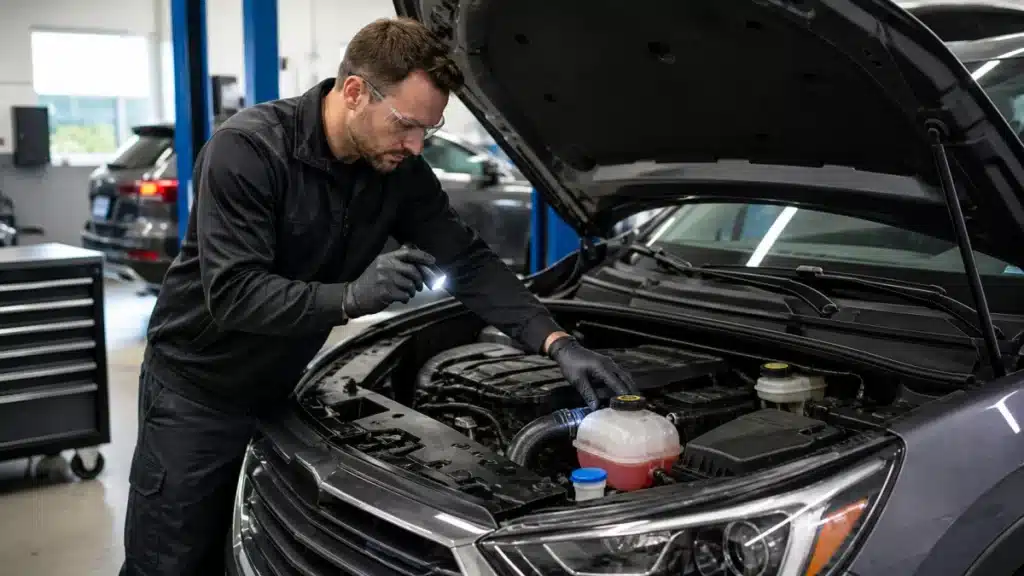
Summer Engine Care in Waterloo Region
The best way to handle a roadside emergency is to prevent it in the first place. Good summer engine care in Waterloo Region starts long before your first big road trip, with a cooling system that’s ready for the heat.
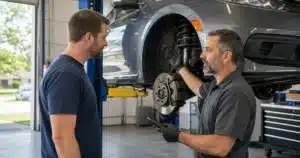
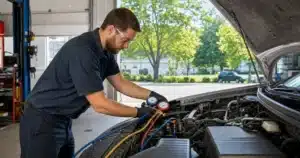
Before a long drive, we check and top up your coolant, brake fluid, power steering, and washer fluid, and we inspect your belts and hoses for cracks or soft spots. We test the battery too, since summer heat is surprisingly hard on batteries. Our certified technicians handle these multi-point inspections every day, and we’ll tell you exactly what your car needs with no surprises.
A strong air conditioning system also matters, because a struggling compressor adds strain right when your engine is already working hard. If your cabin isn’t cooling the way it used to, our air conditioning service can sort it out before you travel.
How We Keep Your Cooling System Ready
Since 1967, our family has treated every car that rolls into the shop like our own. Three and four generations of the Zister family have built a reputation on honest work and preventive care, not scare tactics.
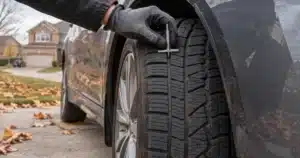
When you bring your vehicle in ahead of summer travel, we look at the whole picture: fluids, filters, belts, hoses, and the battery, all backed by quality parts and our NAPA AUTOPRO training. Proper tire pressure matters in the heat too, and our wheels and tires team keeps you rolling safely.
Whether you’re in Kitchener, Waterloo, or Cambridge, a quick pre-trip check gives you real peace of mind. That way, the only thing you’re thinking about on the highway is where to stop for ice cream.
FAQ
Can I keep driving a short distance if my car overheats?
We really don’t recommend it. Even a few kilometres with an overheating engine can warp the cylinder head or crack the block, turning a modest repair into a very expensive one. Pull over as soon as it’s safe, let the engine cool, and check your coolant. If the problem persists, call for a tow rather than risk lasting damage to your vehicle.
How often should I have my cooling system checked?
For most drivers in Kitchener-Waterloo, an annual inspection is a smart baseline, ideally before summer road-trip season. Coolant breaks down over time and hoses harden with age, so a yearly check catches small problems early. If your vehicle is older or you tow heavy loads, more frequent visits are wise. We’ll give you an honest recommendation based on what we actually see.
Is it normal for the temperature gauge to rise in traffic?
A slight rise in slow, stop-and-go traffic can be normal, since airflow through the radiator drops when you’re not moving. What isn’t normal is the needle climbing toward the red or a warning light coming on. If that happens, treat it seriously. Turn off the A/C, switch on the heater, and find a safe place to stop and let things cool.
What kind of coolant should I add in an emergency?
Use the coolant type specified in your owner’s manual, and when possible add a pre-mixed formula so the ratio is correct. In a pinch, distilled water can get you to a safe stop, but it dilutes the mixture and isn’t a real fix. Once you’re home, book a proper flush and top-up so your cooling system is protected for the rest of the season.
Conclusion
Knowing what to do if car overheats means staying calm, pulling over safely, and letting the engine cool before you check the coolant. Catching the early warning signs and staying ahead with regular checks is what really keeps your family safe on the road.
At Jerry Zister’s, we’ve been your neighbourhood mechanics since 1967, and we’d rather help you prevent a breakdown than rescue you from one.
Planning a summer trip across Ontario? Book a pre-trip cooling system check with our team today.