Quick Answer
Cold mornings put real stress on your car’s electrical system. The most common car electrical problems in cold weather show up as a slow engine crank, dimming headlights, dashboard warning lights, sluggish power accessories, and a clicking starter. Catching these signs early keeps your family safe and saves you from a frustrating no-start morning.
As the evenings start to cool across Waterloo Region, the roads aren’t the only thing feeling the chill. Your battery, alternator, and wiring all work harder when the temperature falls, and small issues you ignored all summer tend to surface right when you need your vehicle most. At Jerry Zister’s, we’ve watched three generations of local drivers deal with the same frost-season surprises. The good news? Most of them give you plenty of warning first. Learn to spot the signals below, and you can book a check-up before a weak start turns into a cold-morning headache in the driveway.
Table of Contents
- What Causes Car Electrical Problems in Cold Weather
- 1. A Slow, Labouring Crank When You Start
- 2. Dimming or Flickering Lights
- 3. Dashboard Warning Lights That Appear as the Weather Cools
- 4. A Clicking Sound and No Start
- 5. Power Windows, Locks, and Heated Seats Acting Up
- 6. Corroded Terminals or a Swollen Battery
- Frequently Asked Questions
- Conclusion
What Causes Car Electrical Problems in Cold Weather
Cold air is hard on a battery. The chemical reaction that produces cranking power slows down as the mercury drops, so a battery that felt perfectly healthy at the height of the summer heat can suddenly struggle before the first frost. At the same time, thick, cold engine oil asks for more current to turn over.
Your charging system takes the brunt of it too. A tired alternator or a loose belt that got you through warm weather may no longer keep up with heaters, defrosters, and lights all running at once. That combination is exactly why car electrical problems in cold weather tend to arrive all at once rather than one at a time.
1. A Slow, Labouring Crank When You Start
The clearest of all the weak car battery symptoms is a starter that turns over slowly, like the engine is dragging itself awake. If you hear that long rrr-rrr-rrr before it finally catches, your battery is losing its ability to deliver a strong surge of power.
This often gets worse day by day as temperatures fall. A battery near the end of its life may start fine in an afternoon but barely crank after a cold night. If your mornings are starting to feel like a gamble, it’s worth having the battery and charging system tested while the fix is still simple.
2. Dimming or Flickering Lights
Watch your headlights at a red light. If they noticeably brighten when you rev and dim when you idle, your charging system may not be keeping up. Interior and dashboard lights that flicker or pulse are another common tell.
Dimming lights can point to a failing alternator, a worn drive belt, or poor connections at the battery. Because so many systems share the same electrical supply in winter, one weak link affects everything. If you notice it, mention it at your next visit so we can trace the source before it leaves you stranded on a dark Cambridge side street.
3. Dashboard Warning Lights That Appear as the Weather Cools
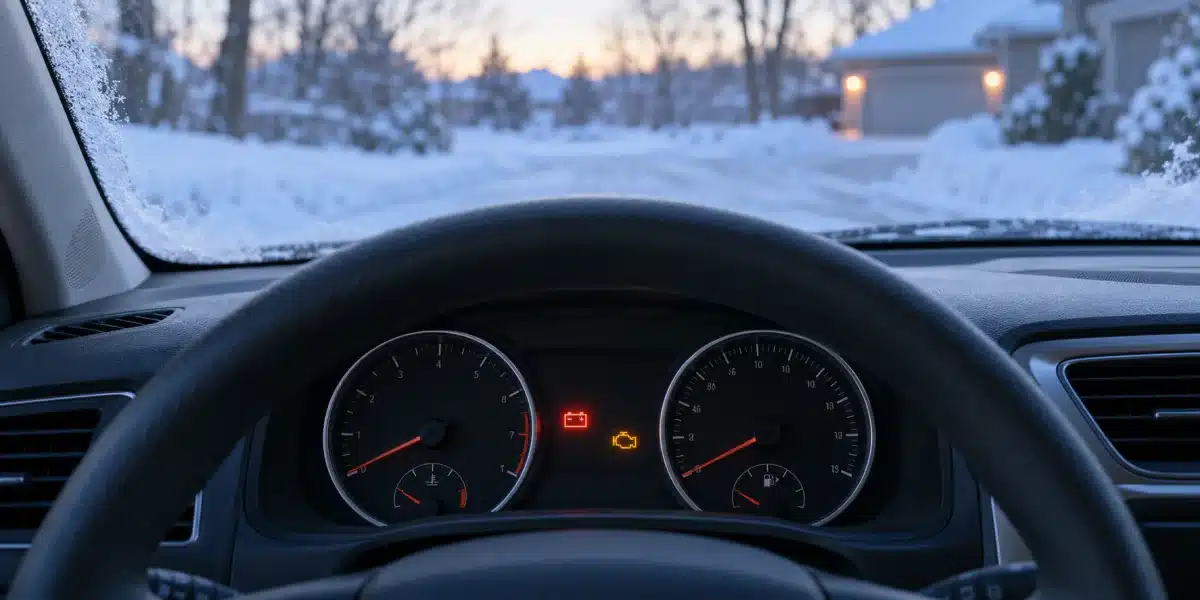
The appearance of new dashboard warning lights in fall is one of the most overlooked signals drivers get. A battery light, a check engine light, or an ABS light that suddenly flickers to life as the cold sets in often traces back to the electrical system rather than the engine itself.
Low voltage can confuse sensors and trigger codes that seem unrelated. That’s where modern diagnostics earn their keep. Our team uses the right tools to read those codes and tell you exactly what your car needs, with no guesswork and no hidden charges. Ignoring a lit dash rarely makes it quieter.
4. A Clicking Sound and No Start
Turn the key and hear a rapid click-click-click with no crank? That’s the sound of a battery too weak to spin the starter, or a starter that isn’t getting a clean connection. It’s one of the most frustrating ways to begin a workday.
Sometimes a boost gets you going, but a jump start is a bandage, not a cure. If the clicking returns, the battery, cables, or starter need a proper look. A quick test tells us whether you need a new battery or whether corrosion and loose terminals are the real culprit.
5. Power Windows, Locks, and Heated Seats Acting Up
When voltage runs low, the comforts go first. Power windows crawl, door locks hesitate, and heated seats or mirrors feel weaker than usual. These accessories draw heavily on an already strained system, so they’re often the earliest hint that your charging capacity is slipping.
Drivers tend to blame the individual feature, but the pattern matters more than any single symptom. If several accessories misbehave at once on cold mornings, treat it as an electrical issue rather than a string of coincidences. A simple test during routine general car maintenance can confirm it fast.
6. Corroded Terminals or a Swollen Battery
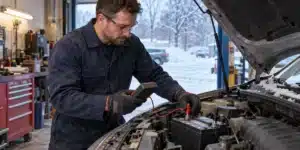
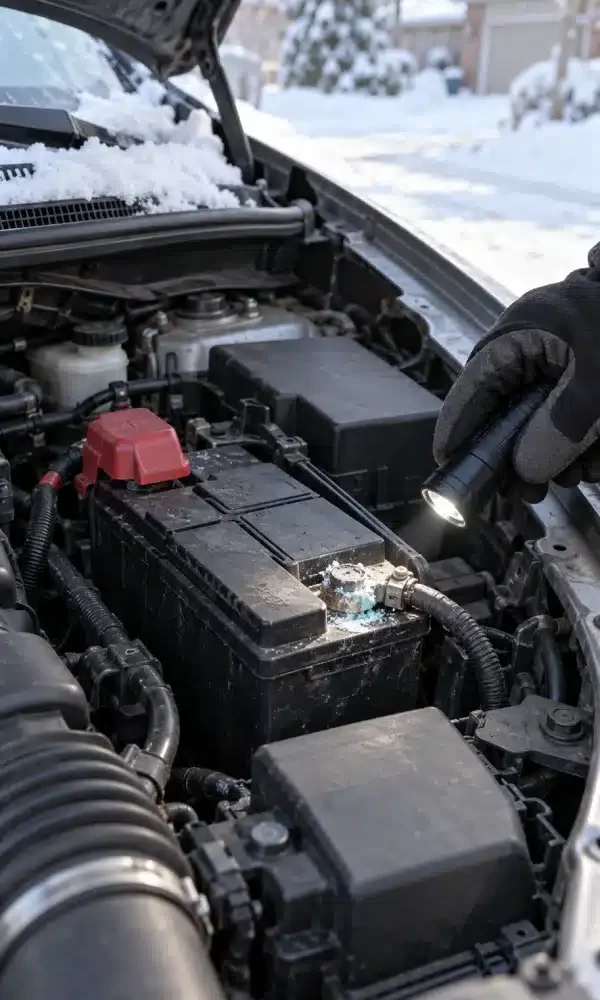
Pop the hood and have a look. A white or bluish powder around the battery posts is corrosion, and it chokes the flow of power right when you need it. A battery case that looks bloated or swollen is a clear sign it’s reaching the end of its service life.
Corrosion builds a resistance barrier between the battery and your cables, which can mimic a dying battery even when the battery itself is fine. Cleaning and tightening the connections sometimes restores a strong, reliable start. When it doesn’t, we’ll tell you honestly and show you why, so there are no surprises.
Frequently Asked Questions
How cold does it need to get before my battery is at risk?
There’s no single magic number, but batteries lose a meaningful share of their cranking power once temperatures dip toward freezing. A battery that’s already a few years old is the most vulnerable. If yours is aging, the smartest move is a quick load test before the first hard frost so you’re not caught off guard on a frozen morning.
Can a weak battery actually trigger my check engine light?
Yes. Low voltage can cause sensors and modules to misread data, which sometimes sets off a check engine light or other alerts. That’s why we don’t just clear the code and send you off. Our diagnostic tools help us separate a true engine fault from an electrical gremlin, so you only pay for the repair your vehicle genuinely needs.
Should I replace the battery or just recharge it?
It depends. If a battery is simply drained, a proper charge may restore it. If it’s old, swollen, or repeatedly failing to hold a charge, replacing it is the safer bet. An honest test gives you the answer. We’ll walk you through the results and let you decide with no pressure and no aggressive upsell.
What else should I check before winter driving?
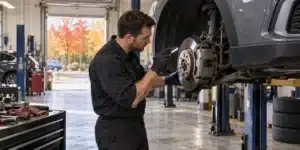
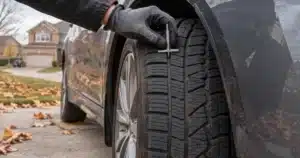
Battery and electrical health are a great start, but brakes, antifreeze, and tires matter just as much. Many families pair an electrical check with a brake inspection and a winter tire changeover in one visit. Rolling it into a single appointment is the easiest way to get ready for the season ahead.
Conclusion
A slow crank, flickering lights, and a lit dashboard aren’t random bad luck. They’re your vehicle asking for a little attention before the deep cold arrives.
Spotting car electrical problems in cold weather early means fewer no-start mornings, safer commutes, and real peace of mind for your whole family. Most fixes are small when you catch them in time.
As your neighbourhood mechanics since 1967, the team at Jerry Zister’s is here to test your battery, read any warning lights, and tell you exactly where you stand. Book your fall electrical check-up with us today.