Quick Answer
Wondering how to check worn struts before a road trip? Watch for a bouncy, nose-diving ride, uneven tire wear, and clunking over bumps. Press down firmly on each corner of the car and count the rebounds. More than one or two, and your suspension needs a professional look.
Summer in Ontario means packing the family and pointing the car toward the cottage, Niagara, or the long haul up Highway 400. Before you go, your suspension deserves a quick once-over. At Jerry Zister’s, we’ve helped Waterloo Region families get road-trip ready since 1967, and worn struts are one of the most common issues we catch.
They rarely fail all at once. Instead, they fade slowly, so you get used to a rougher ride without realizing it. This guide walks you through the warning signs, a few tests you can try at home, and when it’s smart to let a certified hand take a look.
Table of Contents
Why Worn Struts Threaten a Long Drive
Struts do more than smooth out bumps. They keep your tires planted on the pavement, which is what gives you steering control, braking response, and stable cornering. When they fade, the whole car floats and dives, and it takes longer to settle after every dip in the road.
Around town you might not notice much. Over a four-hour highway run, though, tired dampers make the car feel unsettled, they wear your tires unevenly, and they stretch out your stopping distance. Even solid brake repair and inspection can only do so much if the suspension underneath is spent.
Step 1: Watch for the Visual Clues
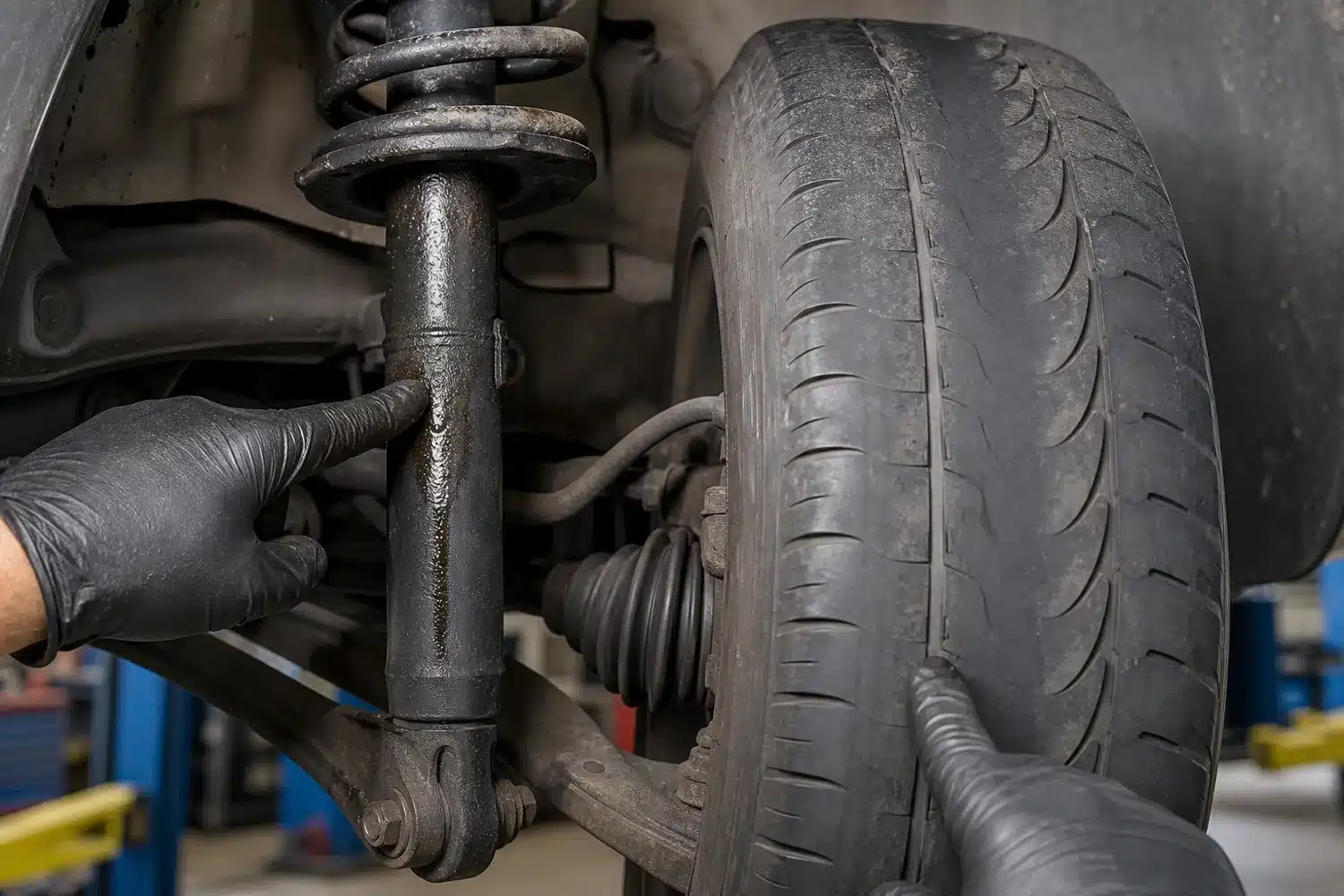
Start with a walk-around in good daylight. Look behind each wheel at the strut body for oily streaks or wetness. A leaking strut has lost its damping fluid, and that is a clear sign of trouble.
Next, check your tires. Cupped or scalloped patches, where the tread wears in uneven scoops, often trace back to bouncing suspension. If you spot that pattern, it is worth having your wheels and tires inspected too.
Finally, park on level ground and eye the car from the front and side. One corner sitting lower than the rest can mean a sagging spring or a used-up strut.
Step 2: Try the Simple Bounce Test
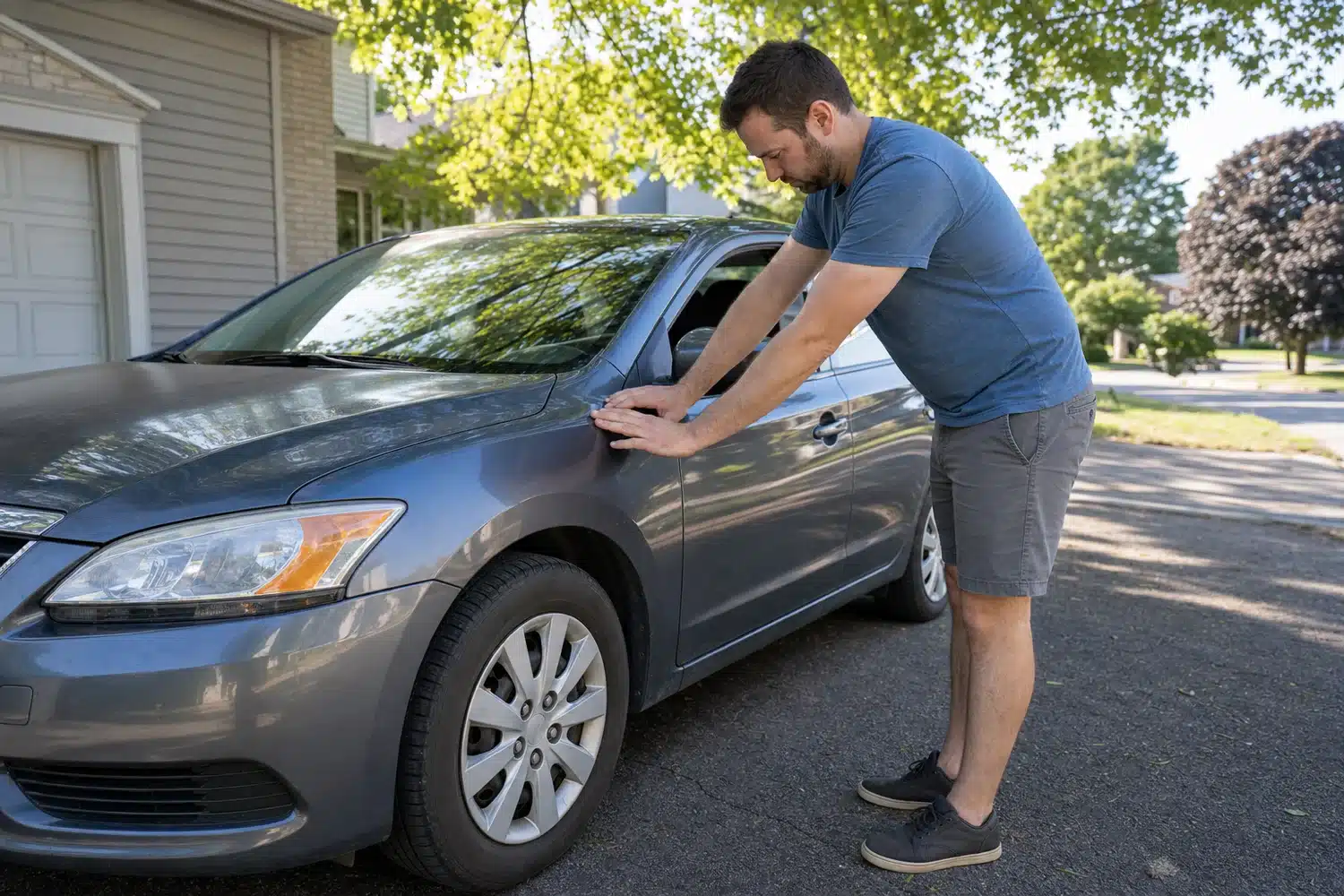
Here is the classic driveway test. Push down hard on one corner of the car, right over the wheel, then let go. A healthy strut brings the body back up and settles in one smooth motion.
If the corner keeps bobbing two, three, or more times before it rests, the damping is gone. Repeat the process at all four corners so you can compare, because worn shocks often go one axle at a time. A little difference between front and rear tells you a lot.
Step 3: Notice the Signs of Bad Shocks on the Highway
Some clues only appear at speed. On the highway, pay attention to how the front end reacts when you hit a seam or an overpass joint. A car with worn dampers keeps pitching up and down long after the bump is behind you.
Other signs of bad shocks on the highway include a floaty, wandering feel that has you making constant small steering corrections, plus extra body sway when a transport truck rushes past. Hard nose-diving under braking is another red flag. If any of that sounds familiar, it is worth having things checked before you travel.
How to Check Worn Struts Right in Your Driveway
You can pull these steps into one quick routine at home. Walk around for leaks and uneven tire wear, run the bounce test at each corner, then take a slow drive over a familiar bumpy street and note how the car settles.
Write down what you find. A short list of symptoms helps your mechanic zero in fast and keeps the visit honest, with no guessing. That said, a home check has limits, which brings us to the mistakes we see most often.
Common Mistakes People Make
The biggest mistake is assuming a rough ride is just old roads or old age. Suspension wears so gradually that your body adjusts, so the change sneaks up on you. A second set of hands, or a professional inspection, catches what you have stopped noticing.
Another common error is replacing tired shocks without checking the parts around them. Tie rods, ball joints, and mounts wear together, and a fresh strut bolted to a worn mount will not ride right for long.
Finally, do not skip the alignment afterward. New suspension changes how the wheels sit, and a proper wheel alignment protects your new parts and your tires.
When to Replace Car Struts in Kitchener
There is no single mileage that fits every car. Wear depends on your roads, your loads, and how many potholes a Waterloo Region winter throws at you. Knowing when to replace car struts in Kitchener really comes down to symptoms more than numbers.
If your driveway check turned up leaks, endless bouncing, or that unsettled highway feel, book an inspection before the long trip rather than after. At Jerry Zister’s, we will tell you exactly what your vehicle needs, with no hidden charges, so you can decide with clear information.
Planning a big drive this summer? It is a smart time to look at the whole picture, and a suspension check fits right in alongside your other road-trip prep.
FAQ
How do I know if it’s my struts or my shocks?
On most vehicles the front uses struts and the rear uses shocks, though many people use the words interchangeably. The symptoms overlap: bouncing, floating, and nose-diving. During an inspection, we identify which component is fitted to your car and which corner has worn, so you only replace what actually needs it.
Can I still drive with worn struts?
You often can, but it is not ideal, especially before a long highway trip. Worn dampers lengthen your stopping distance, reduce control in emergency moves, and wear your tires faster. For short local trips the risk is lower, yet we would still recommend getting them checked soon so a small issue does not grow.
How long does a suspension inspection take?
A visual and hands-on inspection is usually quick, often part of a wider road-trip check-up. Timing depends on your vehicle and what we find. Rather than promise an exact number, we will give you a clear estimate up front and keep you posted, so there are no surprises when the work is done.
Will worn struts really affect my tires?
Yes. When a strut can no longer control the wheel, the tire bounces instead of gripping steadily. That creates cupped, scalloped wear patterns and shortens tire life. Replacing worn suspension and following up with an alignment helps your tires wear evenly and last the way they should.
Conclusion
A smooth, planted ride is not just about comfort. It is about keeping your family safe on those long Ontario drives, protecting your tires, and arriving relaxed.
Now that you know how to check worn struts, a few minutes in the driveway can save you real trouble on the road. When something feels off, trust your gut and get it looked at.
At Jerry Zister’s, your neighbourhood mechanics since 1967, we treat your car like our own. Book a suspension check before your next road trip and travel with peace of mind.